Your 2026 Medicare Premium Horizon: Navigating Part B, Social Security, and Your Income Outlook
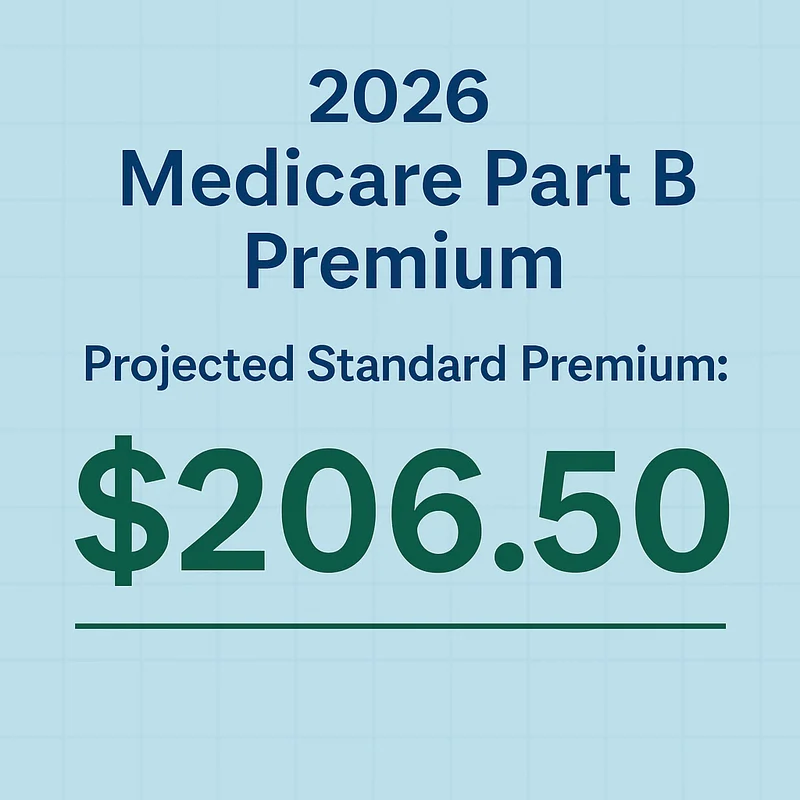
The numbers are out, and let’s be honest, they’re a stark reminder of the challenges we face. The Centers for Medicare and Medicaid Services just dropped the official word: It's official. Medicare Part B 2026 premium will eat a big chunk of Social Security COLA. Medicare Part B premiums will increase for 2026, hitting $202.90 a month. That’s nearly a 9.7% jump from 2025’s $185.00, or $17.90 more out of pocket every single month. Now, when you stack that up against the 2.8% Social Security cost-of-living adjustment – which, on average, boosts checks by about $56 – it’s clear that a significant chunk, about $17.90, of that hard-won increase is immediately spoken for. The average monthly COLA increase is cut to $38.10.
When I first crunched these numbers, I honestly just sat back in my chair, a knot forming in my stomach. It’s a classic case of the system eating its own tail, isn't it? Mary Johnson, a sharp analyst, put it bluntly: "The public is likely to perceive this Part B increase as taking a significant chunk of or even most of their COLA." She’s right. It's official. Medicare Part B 2026 premium will eat a big chunk of Social Security COLA. It feels like another continuation in this relentless cycle of rising costs battering consumer finances, especially for older Americans who saw the only increase in poverty across all age groups in 2024. But here’s the thing: every challenge, every seemingly insurmountable hurdle, is simply a blueprint for innovation waiting to be drawn. We can’t just throw our hands up; we have to look for the breakthrough.
The Unpacking of a Challenge: More Than Just Dollars and Cents
This isn’t just about the Medicare Part B premium 2026; it’s about the underlying currents that create such pressure. We’re talking about a system that, for many, becomes a lifeline, yet paradoxically, it seems to demand more and more while delivering less in terms of financial breathing room. The medicare cost 2026 isn't just a line item on a budget; it's a direct impact on the daily lives of millions.
Take the "hold-harmless" provision, for instance. It’s a necessary safety net, preventing the Medicare Part B premium increase from completely swallowing the 2026 Social Security increase for those with lower benefits – say, someone receiving $640 or less from Social Security. In simpler terms, if your premium jump is bigger than your COLA, this rule keeps you from paying the full difference. It’s a Band-Aid, a crucial one, but a Band-Aid nonetheless. It protects the most vulnerable, yes, but the portion they don't pay gets spread out among others not protected. And let’s not forget, not everyone is even eligible for this protection: new Medicare enrollees, those not receiving Social Security benefits, and high-income earners (which often ties back to medicare premiums based on income and the 2026 IRMAA brackets).
This is where my MIT-trained brain starts buzzing. We're seeing a system constantly reacting to symptoms – increasing premiums, applying temporary fixes like hold-harmless – rather than addressing the root causes with truly transformative solutions. What if we saw this moment not as a burden to be endured, but as a powerful catalyst, an urgent call to action for a fundamental reimagining of how we approach senior care and well-being?
Beyond the Numbers: A Call for Ingenuity
The truth is, even with the hold-harmless provision, other costs bite. We're talking about Medicare Advantage or Part D premiums – the optional prescription drug coverage – which can also see increases, sometimes as much as $50 in 2026 for some Part D plans. And to complicate things further, there are fewer stand-alone Part D plans to choose from, with the total number dropping by half since 2024. Then there's the annual deductible for Part B, jumping $26 to $283 in 2026. It's like trying to navigate a labyrinth where the walls keep shifting, and the exit keeps getting further away.
But amidst this complexity, there’s a glimmer, a testament to what focused ingenuity can achieve. Remember the talk about medicare premiums for 2026 potentially being even higher? Well, they could have been about $11 more a month if it weren't for a targeted action to address spending on skin substitutes – materials used to treat chronic wounds. Reclassifying these bandages so they aren't billed separately is projected to reduce Medicare spending on these products by nearly 90% in 2026. This is a small, surgical strike, but it’s proof that smart, data-driven interventions can make a difference. It’s like finding a single loose bolt in a massive, complex machine and tightening it, only to realize that the entire apparatus runs a little smoother, a little more efficiently, because of that one, precise adjustment.
Imagine if we applied that same level of innovative thinking, that same commitment to efficiency and patient-centric solutions, across the entire spectrum of senior care. We’re standing at a critical juncture, much like the early 20th century when the advent of mass production transformed industries. We need to leverage the exponential power of technology – AI-driven preventative care, personalized medicine, advanced telemedicine platforms, even robotic assistance for daily living – to not just manage costs, but to profoundly elevate the quality of life for our seniors. Think of a bustling innovation lab, the hum of servers, the excited chatter of developers sketching out new interfaces, all focused on making care more accessible, more effective, and yes, more affordable. This is the kind of breakthrough that reminds me why I got into this field in the first place, pushing the boundaries of what’s possible, because the speed of technological evolution is just staggering—it means the gap between today and tomorrow is closing faster than we can even comprehend.
Of course, with great power comes great responsibility. We must ensure that these technological leaps are equitable, that they reach everyone, not just a privileged few. This isn't just about cutting costs; it's about building a future where aging is met with dignity, innovation, and genuine care. This increase in medicare part b premiums will increase for 2026 cutting into social security increases isn't just a financial headline; it's a clarion call to action for every inventor, every policymaker, every citizen who believes in a better tomorrow. What new paradigms can we unlock? How can we leverage technology to not just manage costs, but elevate care, making it more human, more accessible, and truly sustainable?
The Future Isn't Just Coming, It's Being Built
The rising tide of Medicare premiums 2026 is a challenge, no doubt, but it's also a powerful, undeniable signal. It’s a signal that the old ways are no longer sustainable, and that new, visionary solutions aren't just desirable – they're absolutely essential. This isn't a moment for despair; it's a moment for ingenuity, for collaboration, and for building a future where our seniors aren't just surviving, but thriving. We have the minds, we have the technology, and we certainly have the motivation. Let's get to work.