Wells Fargo Bank Closures: The Official Reasons vs. the Underlying Data
On Monday, October 13, 2025, the glass doors of thousands of American bank branches will be locked. Inside, the familiar hum of currency counters will be replaced by silence. The velvet ropes that guide customer queues will sit untouched. For 24 hours, institutions like Wells Fargo, Bank of America, and Citibank will effectively cease their physical operations.
This is not the prologue to a financial crisis. It is a scheduled, predictable, and frankly, mundane event: the observance of the Columbus Day federal holiday. Yet, the annual cycle of articles advising customers to "plan ahead" seems to suggest a level of disruption that simply doesn't align with the data of modern banking. The real story isn’t that the banks are closing. The real story is how little that word, "closed," truly means anymore.
The Anatomy of a "Closure"
Let's be precise about what this "closure" entails. For a specific subset of banking activities, the shutdown is total. You will not be able to walk into a Capital One or PNC Bank branch to speak with a teller, apply for a mortgage with a loan officer, or open a new checking account. These are person-to-person, high-touch services that rely on the physical presence of bank employees. For the segment of the population that depends exclusively on these services, the day represents a genuine, albeit temporary, logistical hurdle.
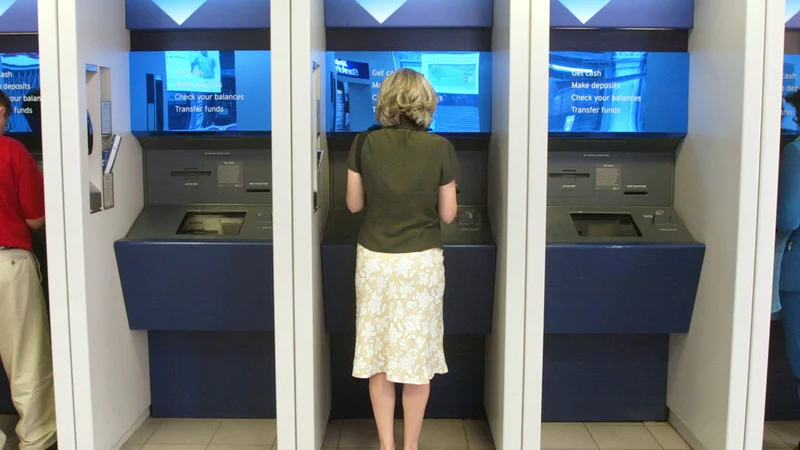
But this is where the narrative of a shutdown begins to fray. The entire digital and automated infrastructure of these financial giants will proceed with what amounts to business as usual. ATMs will dispense cash. Online banking portals will process transfers. Mobile apps will facilitate check deposits and bill payments. Digital wallets like Apple Pay and Google Pay will continue to draw from accounts without interruption.
I've looked at hundreds of these operational schedules over the years, and the pattern is always the same. The core transactional functions of the bank—the high-volume, low-margin activities that constitute the vast majority of customer interactions—are now almost entirely decoupled from the physical branch network. To say a bank is "closed" is like saying a television network is "off the air" because its corporate headquarters is empty for a holiday. The automated broadcast continues, the servers are humming, and the content is still being delivered. The central command post is just dark for a day.
Interestingly, we see a clear strategic discrepancy among the major players. While the majority are closing, as confirmed by reports like Wells Fargo, Bank of America to close for 24 hours, a few notable outliers, namely Chase Bank and TD Bank, will keep their doors open. The source material offers no explanation for this divergence. Is it a calculated marketing move to capture frustrated customers from rivals? Or does their operational model rely more heavily on in-person traffic, making a full closure more costly? Without internal data, it’s impossible to say for certain, but it presents a fascinating fissure in industry consensus. What do their internal numbers on holiday foot traffic show that the others' don't?
A System-Wide Pause
The October 13th event is, of course, larger than just banking. The closures are a direct consequence of Columbus Day's status as a federal holiday, a designation established in 1968. This means the entire federal apparatus pauses. U.S. Postal Service trucks won't be running their routes. Federal offices and courts will be unstaffed. The gears of the federal government will idle for 24 hours before grinding back into motion on Tuesday.
This context is critical. The bank holiday is not an isolated corporate decision but a compliant response to a national protocol. This scheduled pause is a legacy of a pre-digital era, when the movement of money was intrinsically tied to the physical movement of paper and people. A federal holiday meant the clearinghouses and regulatory bodies were closed, making large-scale banking operations impractical, if not impossible.
Today, the system is fundamentally different. While some back-end processes may be delayed, the customer-facing digital architecture is designed for 24/7 uptime. The number of transactions that will be seamlessly processed on October 13th will likely be in the billions—to be more exact, it will almost certainly exceed 95% of a normal Monday's volume. The fact that the physical infrastructure still shuts down in unison with the post office feels like an artifact, a tradition maintained long after its technical necessity has evaporated.
This brings us to the core analytical question: If a bank can perform the overwhelming majority of its functions without its physical branches, what is the primary function of those branches in 2025? It suggests they are evolving into something else entirely—part sales floor, part consultation space, part marketing billboard. They are no longer the primary engine of banking; they are the showroom. And on October 13th, the showroom will simply be closed.
A Legacy Holiday in a Digital World
Let's cut through the noise. The annual hand-wringing over Columbus Day bank closures is a manufactured drama. For the vast majority of Americans, the day will have zero impact on their ability to manage their money. The event is not a signal of systemic fragility; it's a testament to systemic resilience and transformation. The real bank—the network of servers, apps, and automated tellers—doesn’t observe federal holidays.
The most valuable insight from this scheduled, system-wide pause is what it reveals about the true nature of modern finance. It's a diagnostic test that starkly illustrates the divergence between the legacy physical infrastructure and the dominant digital one. The physical branch is now a secondary system, an ancillary service. The fact that its temporary absence is treated as news is the only surprising variable in this entire equation. The real institution never closes. It lives in the cloud, on your phone, and in a constant, uninterrupted stream of data.