Oxy's Landmark Berkshire Hathaway Deal: Why Buffett is Betting Big and What It Signals for the Future
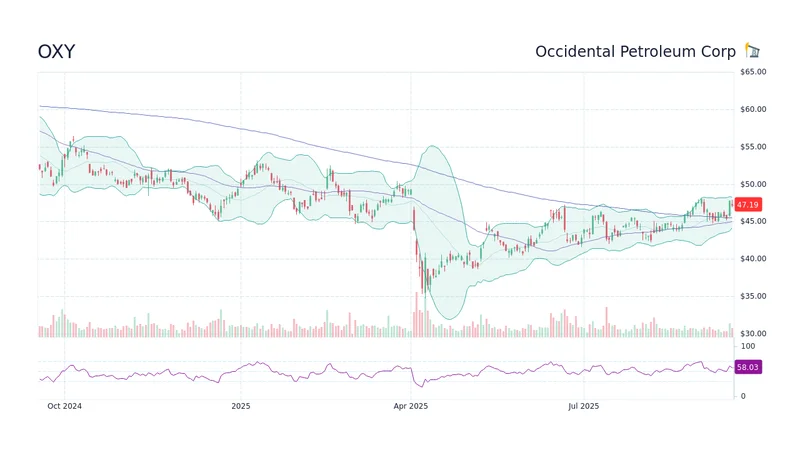
The headlines on October 2nd painted a grim picture. "Occidental Plunges," one screamed. "Occidental Petroleum (NYSE:OXY) Shares Down 5.5% - Time to Sell?" asked another. You could almost hear the frantic murmur on the trading floor, see the screens glowing a furious red as Wall Street scratched its collective head. Occidental Petroleum, a giant of American energy, was selling its crown jewel chemical division, OxyChem, to Warren Buffett’s Berkshire Hathaway. And on the surface, the market’s reaction was pure, unadulterated panic.
When I first saw the news, I’ll admit, I was as puzzled as anyone. Why would a company sell a stable, $5-billion-a-year revenue machine? The analysts offered their usual chorus of concerns about timing and price. It felt like watching a chess grandmaster make a move so bizarre it could only be a blunder. But then, as the noise died down and the signal began to emerge, I saw it. This wasn't a blunder. It wasn't a fire sale. This was the beginning of one of the most audacious corporate transformations I’ve seen in years.
We're not watching a company in retreat. We're watching a company preparing for launch.
The Great Refocusing
Let's be clear about what OxyChem is. It’s a fantastic, reliable, and frankly, traditional business. It makes the essential chemicals that disinfect our water, manufacture paper, and help recycle batteries. It’s the very definition of a solid, cash-generating industrial asset—the kind of business Warren Buffett loves to own for its predictability. And that’s precisely why Occidental had to let it go.
This transaction, valued at a staggering $9.7 billion, isn’t just about cleaning up a balance sheet, though that’s the convenient narrative. Yes, Occidental plans to use $6.5 billion to pay down its debt below a $15 billion target. This lowers their debt-to-equity ratio—in simpler terms, it’s like paying off a high-interest credit card so you can finally stop worrying about the bills and start investing your money in your own future. But the real story, the one that most of the market missed in its initial panic, is hidden in a single quote from Occidental’s CEO, Vicki Hollub. She said the deal "catalyzes a significant resource opportunity we’ve been building in our oil and gas business for the last decade."
Read that again. Catalyzes. This isn't just a financial transaction; it's a chemical reaction designed to accelerate the company’s future. What does it mean for a legacy energy company to be laser-focused on its core oil and gas business in the 21st century? Does it mean simply drilling more holes? Or does it mean pouring capital into the kind of next-generation exploration, efficiency, and extraction technologies that will define the next fifty years of energy?
This is the kind of breakthrough that reminds me why I got into this field in the place—to see the patterns, to connect the dots, and to witness a legacy industry having the courage to reinvent itself from the inside out.
Jettisoning the Booster Rocket
Imagine a massive, multi-stage rocket sitting on the launchpad. The first stage boosters are powerful, reliable, and absolutely essential for getting the craft off the ground. They burn through enormous amounts of fuel to overcome Earth’s gravity. But to reach orbit—to get to the next destination—the rocket has to jettison those boosters. It has to shed the very thing that gave it its initial thrust to become lighter, faster, and more agile.
OxyChem was the booster rocket. For years, its steady, predictable revenue helped power the entire Occidental enterprise. But the company’s ultimate destination isn’t the industrial chemicals market of the 20th century. It’s the high-tech, hyper-efficient energy landscape of tomorrow. By selling OxyChem to the perfect long-term owner, Berkshire Hathaway, Occidental isn't just getting cash; it’s shedding weight, complexity, and distraction.
This is a move of profound strategic clarity. And while the institutional analysts were downgrading the stock, something fascinating was happening on the ground. On platforms like Stocktwits, the sentiment among retail investors, the people who often see the big picture more clearly, flipped from cautious to "extremely bullish." They saw what the spreadsheet-gazers missed: the sheer, unadulterated potential of a leaner, meaner, and more focused Occidental Petroleum. The speed of this sentiment shift is just staggering—it means the gap between the old Wall Street narrative and the new ground-level reality is closing faster than we can even comprehend.
This isn’t unlike when IBM sold its iconic PC division to Lenovo back in 2004. The world gasped. How could IBM sell the business that made it a household name? But IBM knew its future wasn’t in building beige boxes. Its future was in services, in software, in AI. It jettisoned its booster rocket and aimed for a higher orbit. Look where it is today. This is the same playbook, just written for the energy sector. It’s a playbook that demands courage, and with it comes the immense responsibility to use this newfound focus to pursue energy development that is smarter, safer, and more sustainable than ever before.
This Wasn't a Sale. It Was an Upgrade.
Let’s call this what it is: a masterclass in corporate evolution. Occidental didn't just sell a division. It bought its own future. It traded a piece of its past for a clear and unobstructed path forward. In an era where so many legacy companies are paralyzed by disruption, afraid to let go of the assets that once defined them, Occidental just provided the blueprint for how to not just survive, but thrive. They chose focus over sprawl, agility over size, and the future over the present. And in doing so, they may have just kicked off the next great reinvention in American industry. We are all watching.