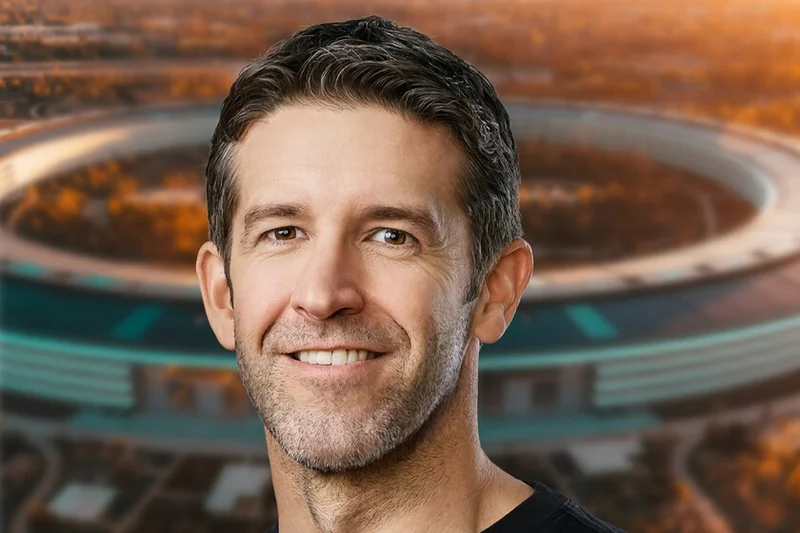
John Ternus as Apple's Next CEO: An Analysis of the Succession Plan and What It Signals
The recent Bloomberg report naming John Ternus as the heir apparent to Tim Cook shouldn't be treated as a revelation. It’s the final confirmation of an observable trend, the last data point in a scatter plot that has been pointing in one direction for years. In the world of corporate succession, particularly for a company with a market capitalization that rivals the GDP of a G7 nation, there are no accidents. There are only carefully managed signals.
For months, the narrative has been coalescing. Apple’s public relations apparatus, an organization that operates with the precision of a Swiss watch, began to subtly shift the spotlight. It wasn’t a sudden floodlight, but a gradual, calculated increase in luminosity on Ternus. He was the face of the iPad Air launch, his presence in marketing materials and interviews becoming more pronounced. This isn't a clandestine palace coup; it's a meticulously planned IPO roadshow for a future CEO. The goal isn't to surprise the market, but to acclimate it.
The quantitative data supports this managed transition. At 50, Ternus is the exact same age Tim Cook was when he took the reins in 2011. This isn't a coincidence; it's a signal of intent for another long-term, stable tenure. This provides the board with a decade, maybe a decade and a half, of predictable leadership. The departure of Jeff Williams, once seen as a potential successor, removed a key variable from the equation, simplifying the predictive model. The public chatter, which I view as a form of qualitative sentiment data, reflects this growing certainty. One commenter I saw had already won a bet that Ternus would be the pick over the more publicly charismatic Craig Federighi. The market, it seems, was already pricing in this outcome.
The Technologist Hypothesis
The most significant data point in this entire affair is the reported preference from Apple's board for a "technologist" to lead the company's next chapter. This represents a clear, strategic pivot from the operational genius of the Tim Cook era. Cook’s tenure was defined by supply chain mastery and the scaling of an existing product vision to unprecedented financial heights. He was, without question, the perfect CEO for the post-Jobs era, transforming creative lightning into a global, operational thunderstorm.
But the sentiment data suggests a growing hunger, both internally and among the user base, for a return to product-centric leadership. A fan’s question about what Ternus’s focus on user experience would be, contrasted with Cook’s focus on sales, is the perfect encapsulation of this dynamic. The market is tired of optimization; it’s craving innovation. Ternus, as the senior vice president of hardware engineering (a promotion he received in 2021, a key marker in his ascent), is the physical embodiment of this hypothesis. He’s overseen the iPhone, iPad, and the critically important transition to Apple Silicon in the Mac. He’s a product guy.
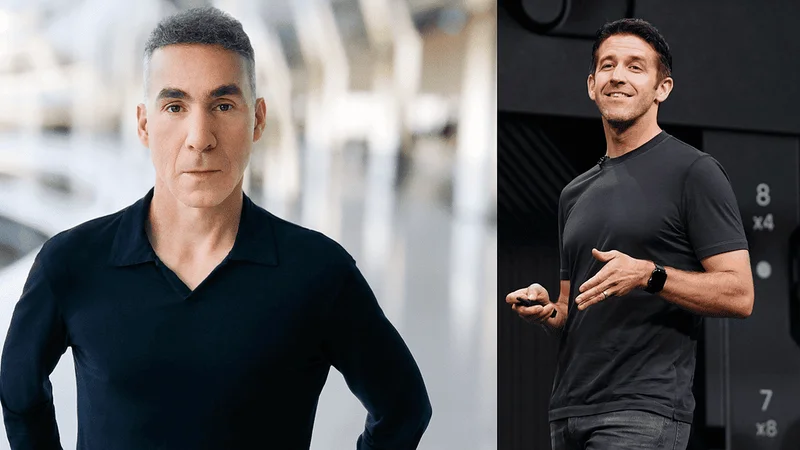
I've looked at hundreds of these corporate transition filings and internal memos, and this particular pattern is unmistakable. When a company feels it has maximized its operational efficiency, it often looks to an engineer or a product designer to find the next S-curve of growth. The board isn't just picking a new CEO; they are making a statement about the company's future priorities. It's a deliberate attempt to shift the corporate center of gravity back from the spreadsheet to the blueprint.
But here’s the critical question the data doesn't answer: Does being a "technologist" automatically equate to being a "visionary"? Or does it simply mean a CEO who understands the engineering pipeline better than the P&L statement? Ternus's track record is one of superb execution on an existing roadmap. The M-series chips are an engineering marvel, but the concept of a vertically integrated chip was a long-term strategic play set in motion years ago. His stewardship has been flawless, but has he demonstrated the kind of radical, category-defining thinking that characterized Apple's golden age? We have no data on that.
From Execution to Vision
This is the fundamental unknown that will define the Ternus era, should it come to pass. Leading a division, even one as critical as hardware engineering, is a fundamentally different task than setting the vision for a multi-trillion-dollar ecosystem. An SVP of engineering is given a problem to solve: "make the next iPhone thinner, faster, and with a better camera." The CEO’s job is to ask: "What comes after the iPhone?"
Tim Cook’s answer to that question has been services and wearables—an incredibly profitable, but largely iterative, expansion. The Apple Watch is a success, but it’s an accessory to the iPhone, not its replacement. Apple Music and TV+ are strong offerings, but they exist in brutally competitive, established markets. The company's growth has been immense, about 800% under Cook's leadership—to be more exact, the stock has risen over 1,000% if you include dividends—but it has been a growth of scale, not of reinvention.
The market is betting that Ternus is the one to change that. The hope is that by placing an engineer in the top seat, Apple will reignite the furnace of true innovation. It's a bet that the man who understands how the sausage is made is also the one who can invent an entirely new food group. But is that a fair expectation? Can one person truly be both a master executor and a radical visionary? Steve Jobs was an outlier, a statistical anomaly. To expect another one to simply emerge from the corporate hierarchy might be the biggest gamble of all. The succession plan is clear. The man's capabilities as an operator are proven. The vision, however, remains a complete unknown.
The Variable is Vision, Not Succession
The anointing of John Ternus is the solution to a problem that was already solved. The "who" was becoming an increasingly obvious answer for anyone tracking the internal movements and public-facing signals (Gurman: Major Apple Leadership Shakeup Impending With John Ternus as Next CEO - MacRumors). The real analysis, the part that should concern investors and customers alike, has nothing to do with the transition of power. That process is as smooth and polished as the back of a new iPhone. The fundamental variable is whether Ternus is an architect or a foreman. We know he can build the house to spec, flawlessly and on schedule. We have absolutely no data to suggest he can design a new one from scratch. The market has priced in the succession. It has not, and cannot, price in the man.