The AI Revolution in Tax Filing: What This Changes and Why It's a Bigger Deal Than You Think
The Unseen Revolution: How AI is About to Slay the Bureaucratic Dragon
Let’s be honest. When you think of the IRS, your heart doesn’t exactly soar with inspiration. You probably picture gray cubicles, the low hum of fluorescent lights, and stacks of paper threatening to collapse under the weight of their own complexity. We’ve all been there. It’s a system built on rules layered on top of rules, a labyrinth of forms and deadlines that feels fundamentally, deeply… inhuman.
In just the last few weeks, we’ve seen a perfect storm of this complexity. The IRS is demanding an almost impossible level of detail for R&D tax credits. A gun store owner in Montana pleads guilty to hiding $1.4 million in sales, caught only after boasting to an undercover agent. And hundreds of thousands of tax professionals are navigating yet another renewal season, now with a new layer of ID.me verification. Each story is a different branch of the same tree: a system so convoluted that it invites error, encourages evasion, and exhausts even the most diligent among us.
But what if I told you we’re looking at this all wrong? What if this rising tide of complexity isn't the problem, but the final, desperate roar of a dying paradigm? We’re treating this as a human-scale challenge of paperwork and process, when it's actually a massive information problem. And we are, right now, at the dawn of the age of tools that solve exactly these kinds of problems.
The Labyrinth Gets Deeper
Let’s zoom in on the R&D tax credit, because it's the perfect microcosm of this entire struggle. For years, claiming this credit was relatively straightforward. You filled out a couple of fields on Form 6765, and the bulk of your justification was in a report you kept on file. It was a system built on a degree of trust.
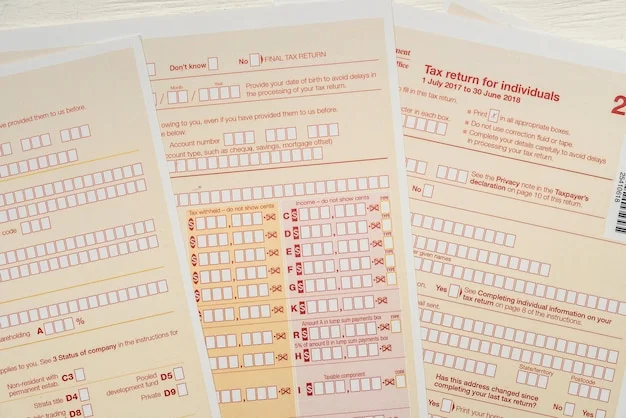
That trust is gone. Starting now, the IRS wants a granular, project-by-project breakdown on the tax form itself. Imagine you’re a software company with fifty ongoing projects. For each one, you now have to itemize direct employee wages, supervisory wages, supplies, contract research costs, and more. You have to write a technical narrative for every single business component.
Think of it like this: the old system was like handing a cartographer a map you drew of your expedition. The new system is like asking you to hand over the GPS data, satellite imagery, and a daily journal entry from every person on your team. It’s an exponential leap in the burden of proof. The IRS says it presumes companies were already doing this level of tracking. I can tell you, from talking to countless founders and CFOs, that’s a wildly optimistic assumption.
This isn’t just more work; it’s a fundamental threat to the very incentive the credit was designed to create. How can a brilliant engineer focus on the next breakthrough when her company’s finance team is constantly tapping her on the shoulder, asking her to account for every 15-minute block of her day? How much innovation gets left on the table because the cost of compliance is simply too high?
A New Kind of Compass
This is where the story pivots. When I first read about how these new GenAI models can ingest a year's worth of engineering notes, Slack messages, and project management data to autonomously build these IRS-compliant reports, I honestly just felt this incredible sense of relief. This is the kind of breakthrough that reminds me why I got into this field in the first place.
We’re talking about AI that doesn’t just fill out forms. It reads and understands technical documentation, translating the complex jargon of your engineers into the precise language the tax code requires. It can quantify R&D time at the individual level, mapping activities to expense categories with a precision no human team could ever achieve without going mad. It generates contemporaneous documentation—in simpler terms, it creates the proof you need, as it happens, linking every claim directly back to the source data.
This isn't just about saving time it's about fundamentally changing the dynamic from one of adversarial archaeology, where you dig through the past to justify your work, to one of collaborative, real-time verification, and that shift is going to unlock so much human potential that's currently trapped under the weight of paperwork. This leap is as significant as the invention of the spreadsheet. Before VisiCalc, financial planning was a static, painstaking process. The spreadsheet didn’t just make it faster; it created the entire field of dynamic financial modeling and changed how business was done. AI for compliance is about to do the same for every regulated industry.
Of course, this raises a crucial question. What happens to the auditors and tax professionals whose careers are built on navigating this complexity? I don’t believe this is about replacement. It’s about evolution. Their role will shift from being data archaeologists to becoming strategic guides, using these incredibly powerful tools to provide higher-level insights and advice. We free the humans to do what humans do best: strategize, negotiate, and connect.
The IRS itself is even signaling a move in this direction, with the expansion of programs like Fast Track Settlement that aim for faster, more efficient resolutions. They, too, are drowning in the data. What if both sides of the audit table were equipped with AI tools that could agree on the facts instantly, leaving only the points of legal interpretation to be debated by the experts?
The End of Paperwork As We Know It
The big idea here is so much larger than just tax returns. The R&D credit is just the first domino. Imagine a world where compliance is no longer a monumental, year-end task, but an invisible, automated layer that runs in the background of your business operations. A world where disaster relief isn't gated by confusing forms, but delivered automatically based on verifiable data. A world where the system is so seamless and transparent that the temptation to underreport nearly $1.4 million in sales, like that Montana business owner, simply evaporates because the cost-benefit of cheating is gone. That's the real promise. This isn't about building a better shovel to dig through the mountain of bureaucracy. It's about building a machine that dissolves the mountain entirely.