Bad Bunny's Super Bowl Halftime Show: Performance Details and the Data Behind His Selection
The announcement, when it arrived, was a clean data point. Benito Antonio Martínez Ocasio, professionally known as Bad Bunny, will headline the Apple Music Super Bowl LX Halftime Show. The event is scheduled for February 8, 2026, at Levi's Stadium in Santa Clara. The broadcast partner is NBC. These are the facts, stripped of narrative.
But the facts are never the full story. The story is in the context, the sequence of events, and the discrepancies that precede the official press release. The selection of Bad Bunny is not merely an artistic choice; it is the result of a complex equation involving market forces, strategic pivots, and the quiet, unconfirmed variable of "no."
The official statements were, as expected, polished to a high gloss. Bad Bunny’s quote was a masterclass in brand alignment: "this is for my people, my culture, and our history." It’s a message that resonates perfectly with his latest album, "Debí Tirar Más Fotos," a project explicitly framed as an homage to his native Puerto Rico. Roc Nation founder Jay-Z, whose firm has managed the halftime show booking since 2019, echoed the sentiment, praising what Benito "has done and continues to do for Puerto Rico." The narrative is clear, consistent, and emotionally resonant. It’s also incomplete.
To understand the decision, one must first analyze the preceding conditions. For months, the dominant speculation centered on two other global superstars: Adele and Taylor Swift. Details on formal offers remain scarce, but the volume of industry reporting and Commissioner Roger Goodell’s public statement that Swift was "welcome at any time" created a powerful market expectation. When both artists were subsequently reported to have passed on the opportunity, it created a vacuum. This is a crucial detail. The Bad Bunny announcement did not occur in a neutral environment; it followed the collapse of at least two other high-probability scenarios.
This context reframes the entire event. It ceases to be a simple proactive selection and becomes a reactive, and far more interesting, strategic choice.
Not a Second Choice, But a Strategic Upgrade
Recalibrating the Variables
Just before the official confirmation, Bad Bunny posted a cryptic message on X, stating he planned to do "just one date in the United States." Hours later, that one date was revealed to be the single largest television platform on the planet. This is the kind of messaging discrepancy that catches my eye. It suggests one of two possibilities: either a brilliantly executed misdirection campaign or a deal that was finalized with extreme velocity. I've looked at hundreds of these corporate rollouts, and this particular sequence feels less like a long-planned strategy and more like a decisive, high-speed maneuver.
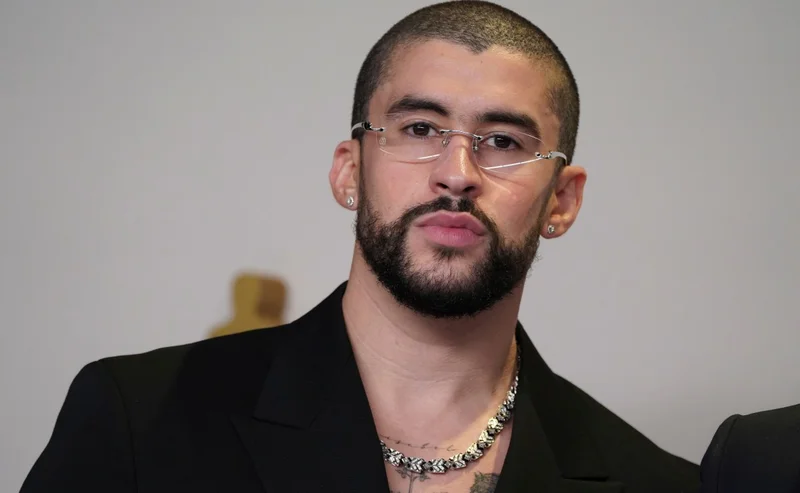
The NFL and its partner Apple Music were facing a potential narrative of rejection. Their perceived top choices were out. The risk was that any subsequent choice would be framed as a consolation prize. Instead, they pivoted. They didn't select a "safer" or lesser-known act. They selected an outlier, an artist who operates on a fundamentally different axis of cultural power.
Let's examine the asset they acquired. Bad Bunny is a quantitative powerhouse. He has three Grammy Awards and a dozen—twelve, to be exact—Latin Grammy Awards. He has charted 15 top-10 hits, a significant number for any artist, but an astronomical figure for one who performs almost exclusively in Spanish. The `bad bunny live` experience is a proven stadium-filler globally, from North America to Latin America. His appeal isn't just musical; it’s a full-spectrum brand integration, with acting roles in major productions like "Bullet Train" and a demonstrated ability to move merchandise, from `adidas bad bunny` collaborations to his own tour gear.
This is not the profile of a second-string choice. This is the profile of a dominant force in a parallel market—a market the NFL has been trying to court for decades with mixed results. The Super Bowl Halftime show has, in recent years under Roc Nation's guidance, followed a clear pattern. After years of legacy rock and pop acts, the strategy shifted. Rihanna (in 2023), Usher (2024), and Kendrick Lamar (2025) represent a sequence of artists who define the contemporary cultural moment. Bad Bunny is not a deviation from this trend; he is its logical, globalized conclusion. He represents a demographic that is younger, more diverse, and historically underserved by the league’s marquee entertainment.
The selection bypasses the traditional gatekeepers of American pop radio and instead plugs directly into the global streaming ecosystem where Bad Bunny has reigned for years. The `bad bunny super bowl` performance isn't just a 14-minute concert; it’s a massive data acquisition opportunity for the NFL and Apple, a chance to capture the attention of a colossal, digitally-native audience that may not have tuned in for another legacy act. The value proposition isn't just about the live broadcast (which will be immense), but about the digital tail: the clips, the streams, the social media velocity. A `bad bunny live stream` of the halftime show will generate engagement metrics that will likely dwarf those of previous years in key international markets.
So, while the initial conditions may have been suboptimal—the apparent rejection by Swift and Adele—the final outcome represents a strategic masterstroke. The league has successfully converted a potential narrative of being "turned down" into a forward-thinking narrative of global inclusion. They didn't find a substitute; they changed the game. They swapped a play for the heart of mainstream America for a play that captures the future of it.
---
The Optimal Outcome from a Suboptimal Set
The most interesting analysis isn't about who the NFL wanted first. It's about the demonstrable value of the asset they ultimately secured. The data suggests that in the long-term, Bad Bunny may prove to be a more strategically valuable choice for the NFL's global brand expansion than any of the artists who reportedly declined. He doesn't just bring an audience; he brings an entirely new, rapidly growing market. This wasn't a recovery from a failed plan. It was an upgrade.
Reference article source: