The Fed's Inevitable Rate Cut: What It Means and Why It's Already a Joke
So, Jerome Powell finally blinked. Or did he just squint?
The big news out of Washington is that the Federal Reserve, in its infinite wisdom, cut interest rates by another quarter of a point. The markets did a little dance, the algorithm-driven headlines screamed, and President Trump probably took a victory lap around the Oval Office. But if you peel back the layers of PR-polished statements and look at what’s actually happening, this whole thing stinks.
Let’s get this straight. Inflation—the thing the Fed is supposed to fight like a rabid dog—is ticking up. Not by a lot, but it’s going in the wrong direction, from 2.9% to 3.0%. At the same time, the job market is slowing down. On top of all that, we’re in the middle of a full-scale government shutdown, which means the brilliant economists at the Fed are basically flying a jumbo jet in a hurricane with the cockpit windows painted black. They have no good, current data. None.
And their response to this mess of contradictory signals and data blackouts? A tiny, perfectly calibrated, 25-basis-point cut. It’s the institutional equivalent of a nervous shrug.
A Quarter-Point of Pure Timidity
This wasn't a bold economic move. It was a political calculation, plain and simple. It’s just enough of a cut to give Trump something to tweet about, but small enough that the Fed can still pretend it’s independent and not just the president’s personal piggy bank. This is a bad idea. No, 'bad' doesn't cover it—this is a five-alarm dumpster fire of policy-making. They're trying to solve a complex equation by just erasing one of the variables and hoping for the best.
The vote itself tells you everything you need to know. It wasn't unanimous. The final tally was 10-2, with one hawk wanting to hold steady and one super-dove, Stephen Miran—a White House guy, offcourse—pushing for a bigger 50-point cut (Fed cuts interest rates for 2nd time this year, but rejects large reduction sought by Trump). This wasn't a committee driven by conviction; it was a fractured group that landed on the most lukewarm, middle-of-the-road compromise imaginable.
What does that even mean for the rest of us? It means the people in charge of the economy are just as confused and divided as everyone else. They’re staring at rising inflation, a slowing job market, and a political grenade in the White House, and their grand plan is to… nudge a number by 0.25% and see what happens.
It’s like trying to stop a charging rhino with a squirt gun. The Fed is either terrified of enraging the president, or they genuinely have no clue what to do next. My money is on both. Are we really supposed to believe that this tiny adjustment is the masterstroke that will fix everything? Give me a break.
Powell's Passive-Aggressive War
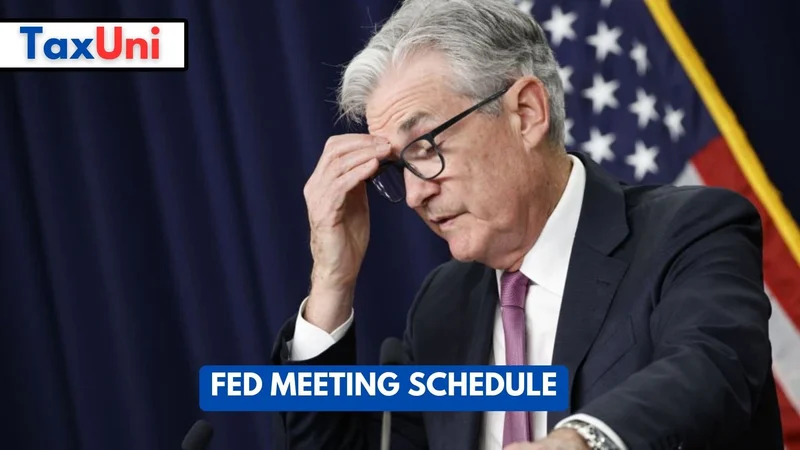
If you want to see the real show, you have to ignore the rate cut itself and watch Jerome Powell’s press conference. Standing at that podium, under the glare of the lights, he put on a masterclass in how to say "screw you" to the President of the United States without actually saying it.
He was asked about a potential cut in December, and his response was pure, weaponized central-banker speak: "A further reduction in the policy rate at the December meeting is not a foregone conclusion, far from it."
Let me translate that from Washington D.C. jargon into English: "Get off my back, Don. I heard you, I gave you your little headline, now leave me alone. I’m not promising you a damn thing for Christmas."
But he didn't stop there. The real genius was how he explained away the very economic problems he’s supposedly trying to solve. Why is inflation ticking up? Powell pointed the finger directly at "tariffs." Whose tariffs? Trump's. Why is the labor market slowing down? Powell mused about the "sharp drop in immigration numbers." Whose immigration policy? You get one guess.
This is the move of a man trapped in an impossible position. He can’t openly fight the White House, but he’ll be damned if he’s going to take the blame for its chaotic policies. So he just calmly lays the facts out, connecting the dots for anyone willing to listen, all while maintaining the serene, boring demeanor of a man discussing municipal bonds. He’s trying to please the markets, the White House, and his own divided committee, and honestly... it's a miracle his head hasn't exploded yet. Then again, maybe I’m the crazy one for expecting anything more than a carefully managed decline.
So We're Just Pretending Now?
Let's call this what it is: a charade. The entire financial world is built on the pretense that the people in these marble buildings have a plan. But they don't. The Fed is pretending its models work in a data vacuum. The White House is pretending this microscopic rate cut is a monumental economic victory. The markets are pretending this provides some kind of clarity for the future. It’s all just noise. We’re being led by people who are just as clueless as the rest of us, but their job requires them to wear a suit and act like they’re in control. This decision wasn't about maximizing employment or stabilizing prices. It was about surviving another news cycle. And for the rest of us, well, we're just along for the ride.