Zcash's Ridiculous Price Pump: What's Behind the Hype and Why It Won't Last
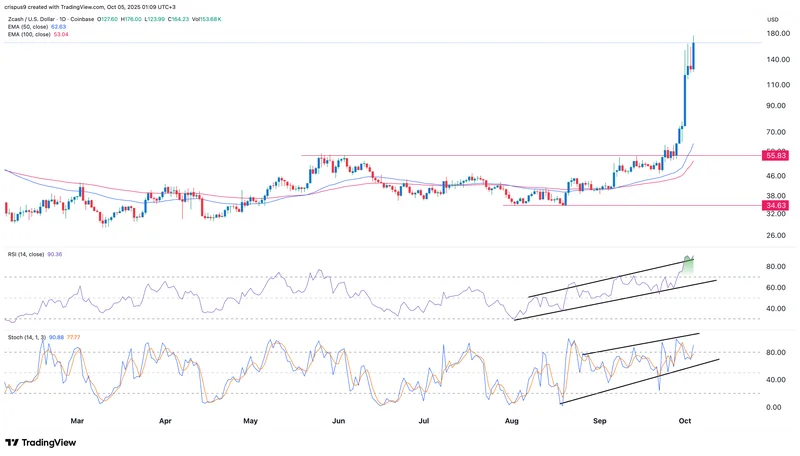
So, Zcash. Remember Zcash? The privacy coin from 2016 that was supposed to make us all financial ghosts, untraceable and free? Yeah, me neither. For years, it’s been collecting dust in the crypto attic alongside a dozen other "Bitcoin-killer" projects. Now, all of a sudden, it’s screaming back to life, ripping past its 2021 high on a triple-digit tear.
And everyone’s asking why. Is it a revival? A revolution in privacy?
Give me a break. Let's call this what it is: a masterclass in weaponized FOMO, fueled by Bored Ape-level speculation and a few well-timed tweets. This isn't a story about technology; it's a story about how easy it still is to get people to chase a shiny object if you dangle it just right.
The Hype Machine is Overheating
You don’t have to look far to find the fingerprints of the usual suspects. The rally’s big spark came from Arthur Hayes—a guy who can move markets with a "vibe check." He casually throws out a $10,000 price target for ZEC on X, and the herd goes wild, leading to headlines that Zcash pumps 30% after Arthur Hayes’ ‘vibe check’ tips $10K target. People who couldn't have picked Zcash out of a lineup a week ago are suddenly all-in, admitting they’re filled with "so much fomo I couldn’t keep myself sidelined."
This is the state of crypto in 2025. Not fundamentals, not adoption, not a technological breakthrough. A "vibe check."
It’s like watching a magic trick where the magician tells you exactly how he’s doing it, and you still fall for it. Hayes and other big names like Naval Ravikanth whisper the magic words, and an army of traders, terrified of missing the next moonshot, pile in and pump their bags. Then you get the PR-friendly analysts calling it a "perfect storm of catalysts." A perfect storm? Offcourse it is. A halving event, which is just a scheduled supply cut that we've known about for years, is suddenly treated like a divine revelation. It's a predictable, baked-in event, not a catalyst for sustainable value.
The whole thing feels like a high school popularity contest. Zcash is the quiet kid in the corner who suddenly gets a shout-out from the quarterback, and now everyone wants to be their friend. But what happens when the quarterback graduates and moves on? Are we really building the future of finance on the fleeting whims of a few crypto celebrities?

Privacy is a Great Story, Until You Look Closer
The narrative they’re selling is that this is all about a renewed focus on privacy. With governments getting nosier and digital surveillance on the rise, people are supposedly flocking to anonymity-focused assets. It’s a great story. It’s compelling. It’s also mostly fiction.
Here’s the dirty little secret about Zcash: hardly anyone uses its main feature. The entire point of the coin is its "shielded transactions," the ones that actually hide the sender, receiver, and amount. But the vast majority of transactions on the network are transparent, just like Bitcoin. People are buying the "privacy coin" and then choosing not to use the privacy.
It's like buying a submarine and only ever using it as a canoe in your backyard pool. What is the point?
This rally isn’t being driven by a sudden, organic demand for financial privacy. The on-chain data shows it. The CEO of BuyUCoin even admitted that the rally appears to be driven by speculation, not "fundamental growth," citing the limited increase in shielded transactions. It brings up the classic debate for investors: Better Cryptocurrency Buy: Ethereum vs. Zcash? Meanwhile, Ethereum is over there actually building a financial ecosystem, with $86 billion locked in DeFi and a burgeoning market for tokenized real-world assets. It’s solving real problems. Zcash is solving a problem that most of its own users seem to be ignoring.
And that brings us to the elephant in the room: the regulators. The regulatory risk for privacy coins is a problem. No, "problem" is too soft—it's a guillotine hanging over the whole project. Financial watchdogs hate these things, which is why coins like Monero and Zcash have been systematically delisted from major exchanges. How can a coin achieve mass adoption when you can't even easily buy or sell it? This ain't a feature; it's a fatal flaw.
Maybe I'm just too jaded. Maybe this time it's different. But history doesn't just rhyme in crypto; it repeats itself like a broken record, and this song sounds awfully familiar.
So We're Doing This Again, Huh?
Let's be real. This isn't a comeback story for privacy; it's a speculative frenzy whipped up by influencers and timed perfectly with a halving narrative. The fundamentals are thin, the actual usage of its core feature is pathetic, and the regulatory hammer is just waiting to fall. People are buying Zcash not because they believe in private, decentralized finance, but because they saw a chart go up and a guy on the internet told them it would go up more. This is a game of musical chairs, and when the music stops, a lot of people who bought in at the top are going to be left without a seat. Don't be one of them.