Holocaust Survivor Ruth Posner Dies Via Assisted Suicide: The Full Story and the Troubling Questions About Her Husband
It arrived not as a cry for help, but as a declaration. An email, sent to family and friends, from a small apartment in Belsize Park, London. In it, Ruth Posner, 96, and her husband Michael, 97, announced their final, mutual decision. They were traveling to a clinic near Basel, Switzerland, to end their lives together.
The note was clear, calm, and deliberate. This was a choice made "without any outside pressure." It wasn't born of terminal illness, but of a careful calculus of what it means to be alive. Their reason was the "failing senses, of sight and hearing and lack of energy." The conclusion they reached was stark and profound: this "was not living but existing."
When I first read about their story, I wasn't just struck by the sadness, but by the sheer, unwavering intentionality of it. In a world obsessed with extending life at all costs, here was a couple who had spent nearly 75 years together, meticulously designing their final chapter. They had looked at the data of their own lives and concluded that the quality of the experience no longer met the parameters they had set for themselves.
This is a story about a choice. But to truly understand the weight of that choice, you have to understand the life that led to it. You have to understand Ruth Posner.
A Life Forged in Defiance, A Death Authored by Will
A Life Forged in the Fight for Agency
To say Ruth was a Holocaust survivor is to state a fact, but it barely scratches the surface of the truth. It’s like calling a microprocessor a piece of sand. Her entire existence, from childhood, was a masterclass in wrestling agency from the jaws of a world determined to strip it from her.
Imagine being a child in the Radom Ghetto. Your parents, your family, are being systematically murdered, sent to the gas chambers of Treblinka. But your father secures you a falsified passport. A chance. You escape. You spend three years on the run, living under a false name with a Catholic family, every single day a performance for your own survival. You see the Warsaw Uprising and are imprisoned not as a Jew, but as a Polish Catholic. You hide on a farm in Germany until the war finally, mercifully, ends.
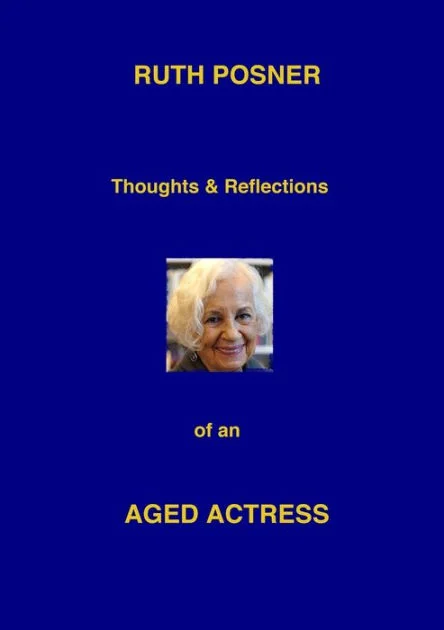
She survived. She and one aunt, out of an entire family. At 16, she came to the UK and didn't just rebuild; she created. She poured that ferocious will to live into art, becoming a dancer with the London Contemporary Dance Theatre and an actress with the Royal Shakespeare Company. She was in films and television shows. She found love with Michael, a chemist who would go on to work for UNICEF, and they built a life—an "interesting and varied life," as they called it in their final note.
This is the kind of personal history that reminds me why I got into this field in the first place—to see how systems, whether technological or societal, can either crush or elevate the human spirit. Ruth’s life was a testament to defeating a system designed for her annihilation.
And that is the lens through which we must view her final decision. This was not a surrender. For a woman who had control stolen from her at every turn as a child, who fought tooth and nail to reclaim it and build a life of her own design, this final act was the ultimate expression of that lifelong battle. It was the last, defiant assertion of her own autonomy. She would not allow the slow, undignified erosion of existence to be the force that wrote her ending. She would write it herself, with her husband of three-quarters of a century by her side.
This idea, of designing one's own end, feels like a paradigm shift on par with the printing press or the internet—it fundamentally alters the relationship between the individual and the systems that govern them. For centuries, the end of life was something that happened to us. Now, we are having a serious conversation about it being something we can choose. This is a profound re-framing of what it means to live and die, it challenges our deepest assumptions about medicine's role and forces us to ask whether the goal is merely to extend a biological process or to preserve the essence of a life.
Of course, this is where we must pause and consider the ethics. This technology—and let’s call it that, a socio-medical technology—is immensely powerful. The conversation about assisted dying must be handled with incredible care. We have to design systems with robust safeguards to protect the vulnerable, to ensure every choice is free and informed, and to prevent coercion. This isn't an easy problem. But the difficulty of designing a safe system doesn't negate the fundamental human question at its core: who gets to decide what a good life, and a good death, looks like?
Ruth’s friend, the playwright Sonja Linden, noted that Ruth supported legalising assisted dying in England. Had that been the case, she wouldn't have had to travel abroad. She could have ended her life in her own home, in the city where she had built her world.
We are at an inflection point. The story of Ruth and Michael Posner isn't a fringe case; it is a powerful signal from the future. It’s a story about love, about a partnership so deep it extended to the final moment. It’s a story about legacy, from a woman who, as the Holocaust Memorial Trust noted, made it her mission to speak to young people about her experiences. And ultimately, it’s a story about the quintessentially human desire for control over our own narrative. What could be more human than the desire to write your own ending?
Designing the Final Chapter
This was never a debate about the merits of death. It is, and always has been, a conversation about the sanctity of a life lived on one's own terms. Ruth Posner’s entire existence was a rebellion against having her story written for her by others. Her final act was not a conclusion defined by frailty, but a climax authored by will. We are the architects of our lives; the most profound question we now face is whether we will also be allowed to be the architects of their end.
Reference article source: