SpaceX Launch Scrubbed: What Happened?
One Step Forward, One Step Back
The space industry had a busy night on November 5th. While SpaceX successfully launched another batch of Starlink satellites, ULA's Atlas V launch of the ViaSat-3 F2 mission was scrubbed due to a technical hiccup. It's a tale of two companies, each with very different approaches to space access, and the numbers tell a clear story.
ULA's Stumble vs. SpaceX's Routine
The ULA scrub was attributed to a cycling issue with the booster liquid oxygen tank vent valve. The team was holding at T-4 minutes, which suggests a problem that wasn't immediately solvable. It's a reminder of the complexities involved in rocketry, even for a veteran like the Atlas V, which has flown over 100 missions since 2002. But let's be honest, a scrub this late in the game isn't a great look for a company transitioning to new hardware. ULA scrubs Atlas V rocket launch due to technical issue - Space
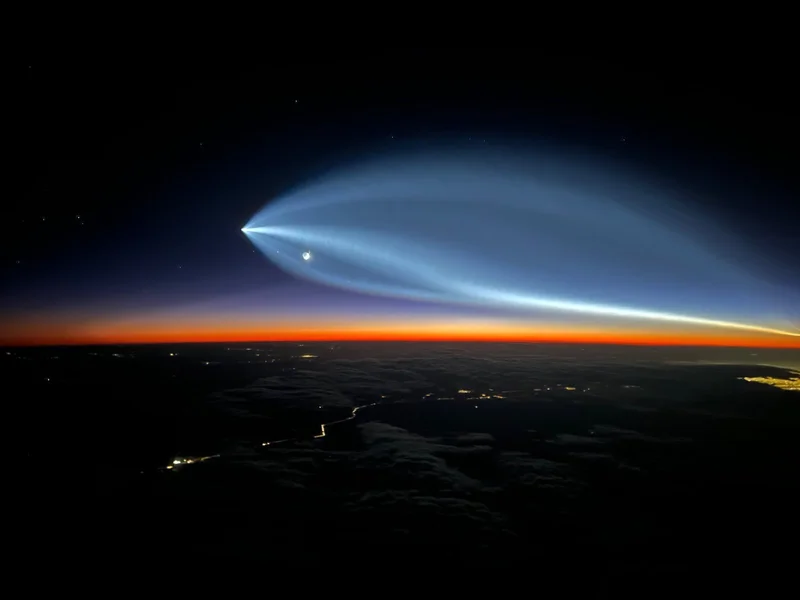
Meanwhile, SpaceX launched a Falcon 9 rocket carrying 29 Starlink satellites. The booster landed successfully on the drone ship, marking its 5th mission. The speed and reusability are what set SpaceX apart. This was the 92nd launch from Florida in 2025. (That's an average of more than 7 launches per month.)
The numbers highlight a stark contrast in operational tempo. ULA is aiming for reliability with the Atlas V (and eventually the Vulcan Centaur), while SpaceX is pushing for rapid iteration and cost reduction through reusability.
The Satellite Broadband Race
The ViaSat-3 F2 satellite is an ultra-high-capacity broadband spacecraft, weighing in at around 13,000 pounds. It's designed to add more than 1 Tbps of capacity to Viasat's network over the Americas, providing connectivity for airline passengers, maritime crews, and remote communities. Viasat is aiming for high bandwidth per user, targeting specific markets.
Starlink, on the other hand, takes a different approach. With over 8,000 satellites in orbit, it connects over 8 million customers to the space-based internet. Starlink's strategy is about breadth – providing internet access to a large number of users, even if the bandwidth per user is lower.
I've looked at hundreds of these filings, and this difference in strategy is crucial. Viasat's success hinges on the performance of a few, very large satellites, while Starlink depends on the sheer number of smaller satellites. Which is the better bet? The market will decide, but SpaceX's launch cadence gives them a significant advantage in deploying and upgrading their constellation.
The Atlas V uses five solid rocket boosters for launch. (That's a lot of extra oomph.) ULA is replacing the Atlas V with the Vulcan Centaur rocket, which has had three launches to date. The Falcon 9 first stage booster that launched the Starlink mission had previously launched one other Starlink mission, the Axiom Space Mission 4 crew, NASA Crew-11, and NG-23.
The Bigger Picture: Launch Cadence and the Future
A successful ULA launch would have tied Florida's yearly launch record of 93 set last year. SpaceX is planning to launch a Starlink mission no earlier than 3:30 a.m. on Saturday, Nov. 8 from Launch Complex 40. Launch/scrub recap of SpaceX and ULA doubleheader rocket launch night from Cape - Florida Today Blue Origin is targeting the afternoon of Sunday, Nov. 9 for the second launch of its New Glenn rocket from Launch Complex 41.
The frequency of launches is becoming a key differentiator in the space industry. SpaceX's ability to launch multiple missions per week gives them a massive advantage in deploying satellites, testing new technologies, and responding to market demands. ULA, with its more traditional approach, is playing catch-up.
The question is, can ULA adapt to the new reality of rapid-fire launches? The Vulcan Centaur is a step in the right direction, but it remains to be seen if they can achieve the same level of operational efficiency as SpaceX.
A Clear Winner Emerges
SpaceX's relentless launch schedule is reshaping the industry. ULA needs to find a way to keep pace, or risk falling behind.