Cathay Pacific & Airbus Join Forces: The Dawn of Guilt-Free Flying
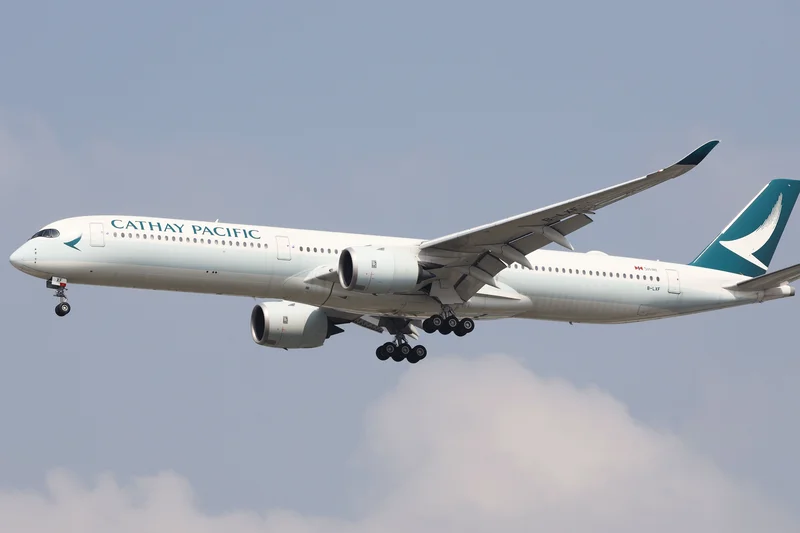
Sometimes, the biggest revolutions don’t start with a bang. They don’t arrive with a thunderous announcement or a ticker-tape parade. They begin quietly, in a conference room, with a handshake and a shared commitment that ripples out in ways no one fully anticipates. That’s exactly what I felt when I read the news out of Hong Kong this week. On the surface, it’s a standard corporate press release: Airbus and Cathay form co-investment partnership for scaling sustainable aviation fuel adoption - Airbus.
It’s easy to be cynical. Seventy million dollars? In the multi-trillion-dollar global energy market, that’s a rounding error. It’s a drop in the ocean. But to see it that way is to miss the point entirely. This isn't about the amount of money. This is about planting a flag. This is about two of the most critical players in the entire aviation ecosystem—the builder and the flyer—locking arms and sending a powerful, unified signal to the market. When I saw this news, I honestly just sat back in my chair and smiled. This is the kind of breakthrough that reminds me why I got into this field in the first place. It’s not just a financial deal; it’s an architectural one. They aren’t just buying fuel; they’re building the market itself.
More Than Money, It's a Market Signal
Let’s break this down. The single biggest roadblock to a future of clean skies isn't technological. We know how to make SAF from various sources, like biofuels and synthetic fuels. The problem is purely one of economics and infrastructure—a classic chicken-and-egg dilemma. Fuel producers won't invest the billions needed to build massive SAF refineries without guaranteed buyers, and airlines have been hesitant to sign massive, long-term contracts for a fuel that barely exists at scale. It’s a standoff that has paralyzed progress for years.
This partnership is the stone that breaks the glass. Airbus and Cathay are essentially creating a powerful gravitational pull on the supply side. They’re not just passively waiting for someone else to solve the problem. They are actively stepping into the void to identify, evaluate, and fund the most promising SAF projects themselves. They’re looking for commercial viability and mature technology, but most importantly, they’re committing to "long-term offtake."
That’s a bit of industry jargon, so let's translate. "Offtake" simply means they’re promising to buy the fuel once it’s produced. Imagine you’re a brilliant startup with a new way to create SAF. Your biggest challenge isn't your science; it's convincing a bank to lend you half a billion dollars to build a factory. Now, you can walk into that bank and say, "Not only is my tech sound, but two of the biggest names in aviation, Airbus and Cathay, are already lined up to be my first customers." That changes the entire conversation. Suddenly, the risk evaporates. The investment makes sense. The factory gets built.
This is less like a simple purchase and more like the co-funding of the first transcontinental railroad. The individual investors weren't just thinking about their own cargo; they were building the essential artery that would unlock the economic potential of an entire continent for everyone. What are we really seeing here? It’s a deliberate act of market creation.
The Asian Fulcrum and the Ripple Effect
The choice of Asia as the focal point for this initiative is no accident. It’s the fastest-growing aviation market on the planet. Placing the production hub there isn't just about serving Cathay's routes; it's about creating an epicenter for SAF that can serve a whole hemisphere. This is a strategic move to build the infrastructure where the future demand will be the highest. Alex McGowan of Cathay called SAF "the most important lever" for decarbonisation, and Anand Stanley of Airbus spoke of catalyzing production in the "most suitable locations." They’re not just talking the talk; they’re building the engine of change right where it’s needed most.
This is the part that gets me truly excited—the potential for a chain reaction is just immense, it means that once one or two of these jointly-funded projects prove successful, other airlines and manufacturers will see the blueprint and the fear of being left behind will drive them to form their own partnerships, creating a virtuous cycle of investment and production that could scale far faster than any government mandate alone. It’s a cascade. What happens when other major carriers in the region see this model working? Do they sit on their hands, or do they jump in?
Of course, with this incredible potential comes a profound responsibility. As we scale up SAF, we have to be relentlessly focused on ensuring the feedstocks are genuinely sustainable. We can’t solve the carbon problem by creating a deforestation problem or by competing with global food supplies. The "S" in SAF has to be non-negotiable. But the fact that this partnership is built on a long-term vision—rooted in a relationship between Airbus and Cathay that goes back to 1989—gives me confidence that this is a serious, calculated endeavor, not a greenwashing stunt.
They know the stakes. Cathay has 86 Airbus jets in the air today and over 70 more on the way. Their futures are inextricably linked. For them, this isn't an optional side project. It's a survival strategy. It’s a necessary investment in the very possibility of their own future. What could be a more powerful motivator than that?
The First Domino Has Tipped
Let's be clear. This $70 million investment will not, by itself, decarbonize the aviation industry. But that was never the goal. Its true purpose is to serve as a catalyst—a proof of concept for a new collaborative model. It demonstrates that the key players in the value chain can stop waiting for someone else to act and instead become the market-makers themselves. This is the shift from passive hope to active creation. We've just witnessed the lighting of a fuse, and its path from here could redefine the trajectory of an entire global industry. The future of flight just got a little bit brighter.