The International Space Station: What It Actually Is and Why You're Obsessed With Seeing It
So the local news is telling everyone in Central Texas to go outside tonight and look up. Why? To see a "bright, fast moving, dot in the sky." A magnificent spectacle, they say.
That dot is the International Space Station, our grand human achievement in the heavens. For a glorious six minutes on Wednesday, it'll pass directly overhead, a silent testament to our ambition, a star built by human hands. Go on, take the kids out. Tell them to wave.
Wave goodbye.
Because that magnificent dot is a ghost. A dead station walking. We're just a few years away from watching it die. NASA has already signed the death warrant: 2030. And the method of execution? A controlled, fiery plunge into the most remote part of the Pacific Ocean.
I just read a NASA press release dripping with the kind of corporate optimism that makes my teeth ache. It gushes about "25 years of continuous human presence" and how the ISS is a "springboard" to the Moon and Mars. It talks about mastering new environments, creating self-sufficiency, and all the "groundbreaking research" that’s not possible on Earth.
Let’s translate that, shall we? "Groundbreaking research" means we learned that bones get brittle and eyeballs get squishy in zero-g. "Self-sufficiency" means astronauts grew some chile peppers. I'm not kidding. They harvested peppers in space, a feat that surely justifies the $150 billion price tag. They also 3D-printed a few plastic tools, something my neighbor does in his garage for about fifty bucks. This is the grand legacy they're selling us while quietly hiring SpaceX to build a kamikaze drone to sink the whole thing.
Give me a break.
Cooperation in Space? More Like Codependency in a Can
A Codependent Mess in Orbit
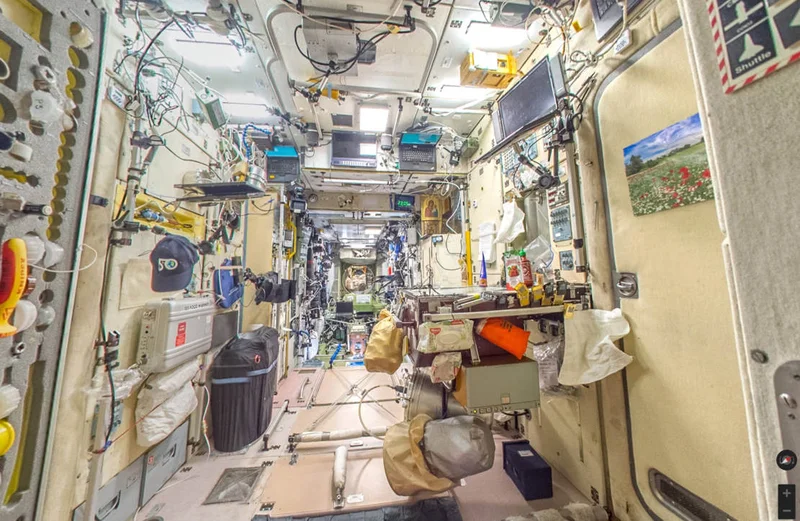
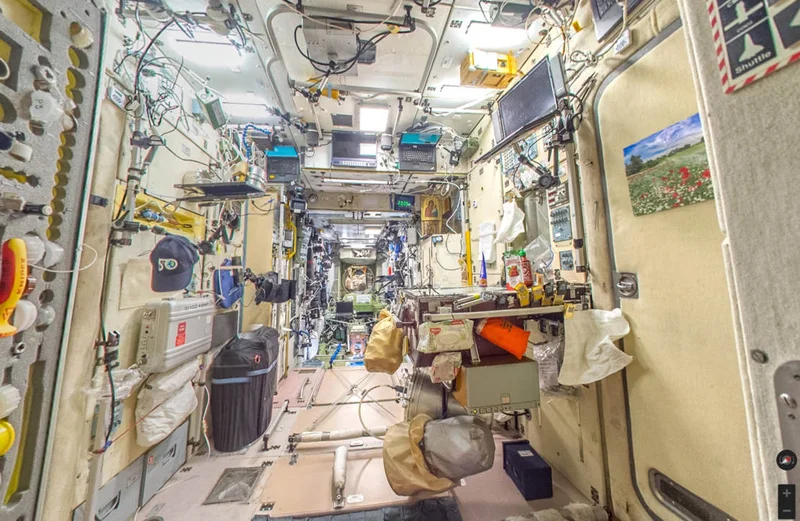
The story they don't tell you in the glossy brochures is that the ISS isn't some shining beacon of seamless international cooperation. It's a creaky, aging, politically nightmarish condo association floating 250 miles up.
For years, we’ve been hearing about air leaks in the Russian segment. The thing is literally losing its breath. But can we just seal off the leaky parts and call it a day? Offcourse not. The station’s main computers—the brains of the entire operation—are parked in the Russian Zvezda module. The attitude control, the stuff that keeps the station from tumbling out of the sky, is mostly on their side. We’re inextricably linked. It's less a partnership and more a hostage situation with a view.
Even our attempts to become independent are a joke. Just recently, a SpaceX Dragon freighter had to fire its own thrusters to "reboost" the station's orbit, because we can't always rely on the Russians to do it. The first attempt failed. They had to abort it four minutes in because the fuel tanks didn't swap right. They got it on the second try, and NASA celebrated this as some huge win for American independence.
This is a bad look. No, 'bad' doesn't cover it—this is a five-alarm dumpster fire of cosmic proportions. We're propping up a leaky, geriatric space RV with emergency boosts from Elon Musk's side-hustle while pretending it's the key to our glorious Martian future. It ain't a springboard; it's a hospice.
So Much for "Human Achievement"
The Billion-Dollar Burial at Sea
So what happens when the plug is finally pulled? The plan is to drive the ISS into the ocean. Specifically, to a place called Point Nemo, the spacecraft cemetery. It's the most remote spot on the planet, where we send our dead satellites to rest.
It’s the galactic equivalent of taking Old Yeller out behind the shed.
After all the speeches about human achievement and exploring the final frontier, the grand finale is a multi-ton heap of scrap metal making a big splash. All that research, all 4,000 experiments they love to brag about, all the advancements in cancer-fighting drugs and artificial retinas—it all ends at the bottom of the sea.
And who gets the honor of carrying out this solemn task? NASA has picked SpaceX to build the "U.S. Deorbit Vehicle." We spent decades and billions building the thing, and now we're paying a private company to destroy it. The irony is so thick you could cut it with a laser.
Then again, maybe I’m the crazy one here. An aerospace engineer wrote a piece saying how sad he'll be to see it go, how our ancestors couldn't have imagined we'd build one of the brightest objects in the night sky. He's not wrong. It was an amazing accomplishment. But it's hard to feel nostalgia for a project whose primary function now seems to be managing its own decline.
Trading Ownership for an Orbital Timeshare
Your New Landlords in Low-Earth Orbit
Don't worry, though. NASA has a plan for what comes next. They're not abandoning low-Earth orbit. They're just outsourcing it.
The agency is throwing hundreds of millions of dollars at private companies to build new, commercially operated space stations. The dream is to have these shiny new orbital habitats ready before the ISS takes its final dive. NASA will then just be a customer, buying missions and services like it's ordering an Uber. I swear, everything is becoming a subscription service. I'm just waiting for the "LEO Prime" membership that gets you free two-day shipping on space-grown lettuce.
So while we're waiting for the private sector to build our next clubhouse in the sky, China will be quietly circling overhead in their Tiangong space station, which has been continuously occupied for years. When the ISS goes down, they’ll hold the record. They'll be the ones up there, doing the science, while we're waiting for our commercial partners to pass a safety inspection.
They talk about this grand vision for Artemis and Mars, but the truth is, we're about to lose our only foothold off the planet. They expect us to believe we're ready for deep space when we can't even keep our starter home in orbit from falling apart...
So, yes. Go outside tonight. Watch that brilliant, silent star glide across the heavens. It's moving at 17,500 miles per hour, a marvel of engineering. But what you're really seeing is the world's most expensive, most complicated, and most beautiful piece of space junk on its final victory lap.
Enjoy the show. It’s the last of its kind.
So Long, and Thanks for All the Debt
Look, I get it. It was a symbol. A big, beautiful, ridiculously expensive symbol of what we could do when we worked together. But symbols don't last forever. This one is old, leaky, and politically compromised. Sinking it in the ocean isn't a tragedy; it's an admission of reality. The dream of the 20th century is over, and now we're just cleaning up the mess and selling the scraps to the highest bidder.
Reference article source: