Taylor Fritz's US Open Run: His Djokovic Showdown and Off-Court Profile Explained
An objective analysis of Taylor Fritz’s recent performance metrics reveals a significant statistical anomaly. In Tokyo this week, the American tennis player advanced to the quarterfinals of the Japan Open, his tenth of the 2025 season. The advance came via a narrow 7-5, 7-6 victory over Nuno Borges, a match that served as a microcosm of a larger, more compelling trendline.
During the match, a frustrated Fritz was overheard yelling to his coach, noting a perceived discrepancy in his opponent’s performance level. He felt Borges was elevating his game specifically during Fritz’s service games, a tactical shift that complicated the American’s rhythm. After the match, Fritz attributed his own slow start to the tangible difference in court speed between the practice courts and the main Centre Court. These are not the generic excuses of a struggling athlete; they are the observations of a technician troubleshooting a system in real-time. He is processing inputs and adjusting his model.
This win in Tokyo, while routine on the surface for a player of his caliber, is another data point in a sequence that demands closer inspection. The narrative of Fritz’s 2025 season is a clear story of two distinct halves, bisected by the start of the grass-court season. The first half was marred by injuries, resulting in what he himself called a “slow start.” The data from that period is noisy, unreliable. The second half, however, presents a clear and powerful signal.
A Hot Streak or a New Baseline? The Data Suggests a Mispricing
A Mid-Season Inflection Point
Since the grass courts began to grow in early summer, Taylor Fritz has won more matches than any other player on the ATP tour. This is the core statistic. It is not an opinion or a projection; it is a hard number that reframes his entire year. His current ATP ranking is world number five (with a career-high of four), but this aggregate number masks the velocity of his recent performance. A simple year-end ranking is a lagging indicator; the rate of change is the metric that matters for predictive analysis.
His own assessment confirms the data. “From the start of grass-court season, I’ve been playing great,” he stated. “I’m really happy with the second half of the year, and I needed it.” This self-awareness is critical. It shows an understanding of his own performance curve. This is not a player on a lucky streak, unaware of the underlying mechanics. This is a player who has identified and corrected for the variables that suppressed his output in the first and second quarters.
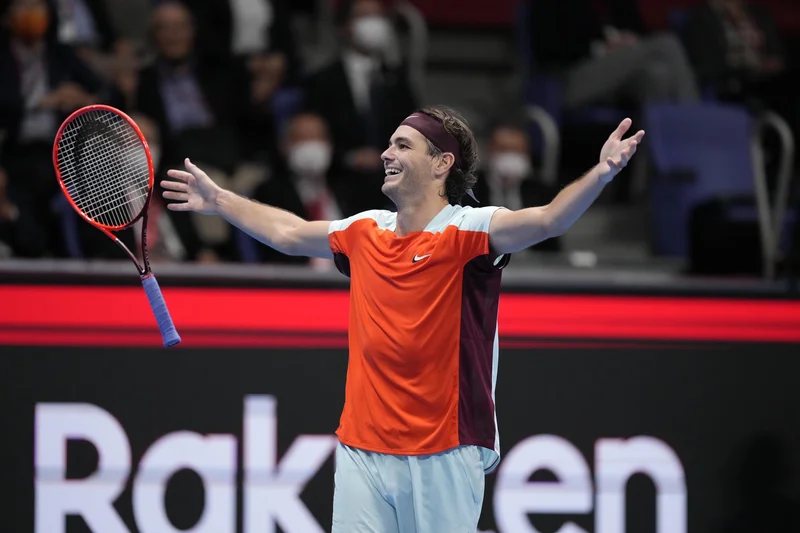
The quality of these wins further validates the trend. Just prior to the Japan Open, Fritz was instrumental in Team World’s third consecutive Laver Cup victory. He secured the title by delivering back-to-back wins against two of the tour’s premier assets, Carlos Alcaraz and Alexander Zverev. Beating players of that tier in a high-pressure, team-based environment is not a random event. It’s a confirmation of process. His comment afterward—"a great feeling to clinch it in the end. It really just kind of is like the perfect end to a great week”—is notable for its focus on the result, the "clinch," rather than the emotion. The system performed as designed.
I’ve looked at hundreds of performance charts across different asset classes, and this kind of sharp, mid-season inflection point is unusual in its clarity. Often, a recovery from a slump is gradual, a slow regression to the mean. What the data on Fritz suggests is not a regression, but the establishment of a new, higher baseline. The early-season Fritz was the outlier, the result of negative external factors (injuries). The player we have seen since June is the true signal. The market, in this case the commentariat and ranking system, may be slow to price in this new reality.
This hypothesis is not without external support. Barry Cowan, a former player and now a commentator for Sky Sports, has gone on record with a clear projection. He believes Fritz “will have eyes on trying to end the year as world number three.” This is a significant forecast. It suggests that the current #5 ranking is undervalued and that there is substantial upward potential before the year-end close. Reaching his tenth quarterfinal of the year is a solid milestone. The fact that the majority of these—to be more exact, a disproportionate number—have been concentrated in this dominant second-half run is the detail that gives the milestone its meaning. The volume of high-level results is accelerating.
His upcoming quarterfinal on Sunday against Sebastian Korda is, therefore, more than just another `fritz match`. It is a test of this new baseline. Consistency is the final proof of any system’s efficacy. Another win would further solidify the data, reinforcing the trendline and making the projection of a top-three finish not just plausible, but probable. The `taylor fritz` of the post-injury period is operating at a different level of efficiency, and the numbers are just beginning to catch up.
---
Recalibrating the Baseline ###
The tennis world is treating Taylor Fritz’s second-half performance as a "hot streak." The data indicates this is a flawed interpretation. A streak is a temporary deviation from the norm. This is not a deviation. This is the establishment of a new, statistically supported performance standard. The injuries of early 2025 were the noise; what we are seeing now is the signal. The market is incorrectly pricing his potential, and the probability of a year-end ranking inside the top three is significantly higher than current consensus suggests.
Reference article source: