The 'Dash' Keyword Problem: Analyzing the Search Intent Battle Between Gaming, Delivery, and Tech
It begins, as it so often does, with a trivial amount of money. A dinner bill at a LaRosa’s Pizzeria in Green Township, Ohio, totaling $66.04. The decision by 26-year-old Jamila Robinson to allegedly leave without paying—a classic dine-and-dash—should have been a minor, frustrating loss for the restaurant. A rounding error in the day’s ledger.
Instead, it escalated with sickening speed. As an employee gave chase onto Jessup Road, the suspect’s 2011 Ford Fusion became a weapon. The employee was struck, thrown to the pavement, and seriously injured. The trivial theft metastasized into felony charges (Suspect arrested in LaRosa’s dine-and-dash, hit-and-run: Court docs). In this case, investigators had a powerful data point to work with: an electronic ankle monitor from a previous charge that placed Robinson squarely at the scene. But for most of the chaotic, low-level conflicts that now define our public spaces, such definitive evidence doesn’t exist.
This single, violent incident over a sixty-six-dollar pizza bill is the perfect microcosm for the market forces driving the explosion in personal surveillance technology. It’s the visceral “why” behind an industry that is rapidly pivoting from simple accident documentation to something far more complex. The demand isn't just for a record of a collision; it's for an impartial, high-fidelity witness to the escalating unpredictability of daily life. And the tech industry is responding with a full-blown data arms race.
The Quantifiable Leap in Surveillance Capability
For years, the standard dash cam was a simple, single-lens device. Its job was to record the road ahead, providing a clear record for an insurance claim in the event of a collision. The value proposition was straightforward. Today, that model looks almost quaint.
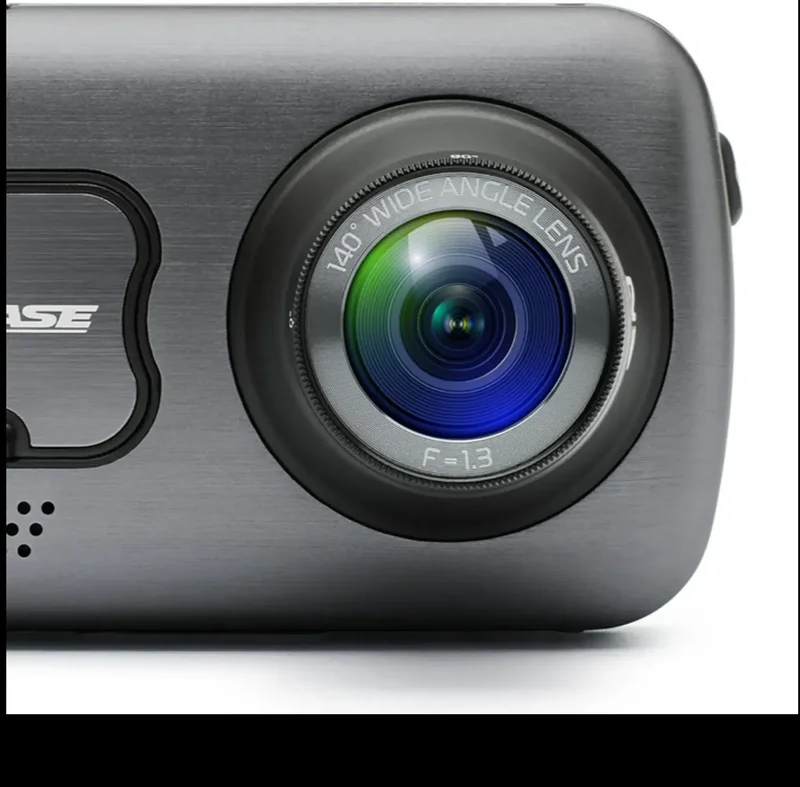
Consider a device like the VanTrue Nexus 5S. This isn’t a camera; it’s a multi-channel data-acquisition system that retails for $399.99. The unit provides four distinct video feeds: a 1944p front-facing camera, a 1080p rear-facing camera, and two separate 1080p interior-facing cameras. The objective is total, 360-degree environmental coverage. VanTrue’s marketing materials correctly note that many accidents occur from the side, but the inclusion of two interior lenses points to a different calculus. This is about monitoring passengers, documenting ride-share interactions, or simply capturing a complete record of everything that happens in and around the vehicle’s ecosystem.
The sheer volume of data being generated is substantial. Four streams of high-definition video, all stamped with GPS coordinates and speed data, are written to a microSD card that can be as large as 512GB. Buffered motion detection ensures the device is already recording 10 seconds before an event is triggered by the G-sensor. This is the new baseline. It’s no longer enough to see the impact; the goal is to capture the moments leading up to it. And this is the part of the market’s evolution that I find genuinely puzzling: at what point does the data collected for personal security create its own set of privacy liabilities? Who is the primary user for a rear-facing interior camera—a parent, a fleet manager, or a litigator?
From Reactive Recording to Predictive Monitoring
If the four-channel system represents an expansion in spatial coverage, the next logical step is an expansion in temporal awareness—moving from recording the past to monitoring the present for signs of the future. This is where the market is heading, and it comes with a significant price increase.
Look at the new Thinkware U3000 PRO, which launched with a price tag of $579.99. On the surface, the specifications are an incremental improvement: a front camera with 4K resolution and a rear with 2K (a notable bump from the VanTrue’s 1080p). But the core innovation isn't in the pixel count. It's in the inclusion of a RADAR-based parking system. This is a fundamental philosophical shift in how a dash camera operates.
Instead of passively waiting for an impact to trigger a recording, the Thinkware’s RADAR actively scans a perimeter up to 5 meters around the vehicle. If it detects a person or another car lingering, it wakes from a low-power state and begins recording before anything happens. It's a move from reactive evidence collection to proactive surveillance. The value proposition here is about capturing the person who keys your door or the cart that rolls into your bumper, not just the hit-and-run.
This leap in capability is a perfect analogy for the broader evolution of data analysis. A traditional dash cam is like a historical ledger, recording transactions after they occur. This new generation of RADAR-equipped devices is more akin to a high-frequency trading algorithm, scanning market data for patterns to anticipate a move before it happens. Of course, this predictive power comes at a cost. The price jump from the VanTrue to the Thinkware is about 45%—to be more exact, a 45.01% increase. Is the ability to potentially record a parking lot vandal worth an extra $180? For a growing segment of the market, the answer appears to be yes.
An Insurance Policy Priced in Gigabytes
My analysis suggests the narrative that these are just "cameras" is obsolete. They are black boxes for our personal lives, running a constant, silent, and increasingly sophisticated cost-benefit analysis on our behalf. The initial investment of $400 or $600 is a one-time premium on an insurance policy against a world of $66 thefts that can escalate into life-altering violence in a matter of seconds.
The question is no longer about whether you need a dash cam. The data is clear: for mitigating liability in a collision, the utility is undeniable. The real question is about the endpoint of this technological trajectory. We are rapidly moving toward a reality where our vehicles are equipped with more sensory and recording capabilities than a 2010s-era police cruiser (with optional LTE modules for real-time cloud uploads). We are purchasing and installing our own private surveillance networks, not just to protect ourselves from other drivers, but from the ambient chaos of the world itself. The ultimate cost of this security won't be measured in dollars, but in the normalization of pervasive, predictive monitoring as a baseline for public life.