The Predictable Chevron Refinery Fire: The 'Official' Cause vs. The Real Impact on Gas Prices
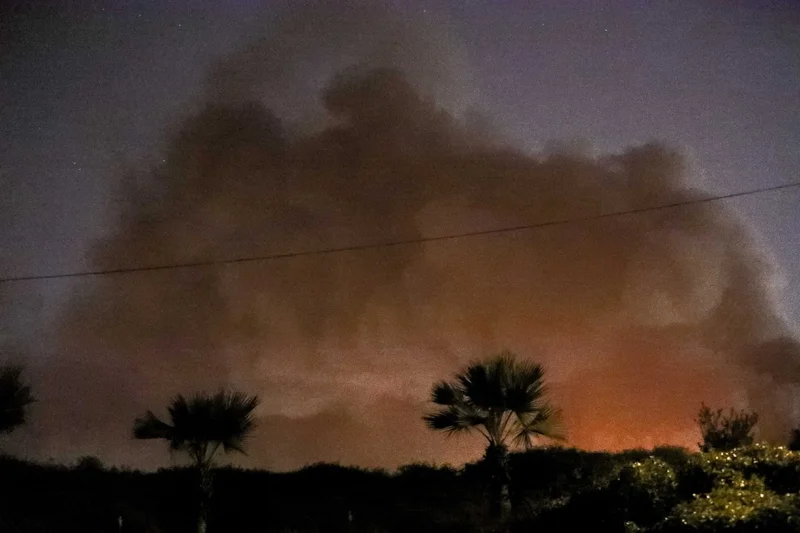
So, a giant fireball lights up the Southern California sky. Houses shake, people grab their kids and dogs and run, and for a few terrifying minutes, it looks like a scene out of a Michael Bay movie has come to life in El Segundo. The Chevron refinery, a hulking beast that has squatted on the coastline since 1911, decided to have a little indigestion. An explosion, a fire, the whole nine yards.
By the next morning? The fire’s out. Officials are on TV saying everything’s fine, no injuries to speak of (except for that one worker who immediately filed a lawsuit, but let’s not get bogged down in details). People are walking their dogs, grabbing coffee, and going about their day. Just a light scent of rubber in the air, a subtle reminder of the inferno that ripped through a facility that produces 20% of the state's gasoline.
And just like that, the narrative shifts. The conversation isn't about the near-miss catastrophe, the long-term health effects on the people breathing in God-knows-what, or the fact that a city of 16,000 lives in the shadow of a potential bomb. No, the conversation immediately becomes about one thing: gas prices.
Give me a break.
The Dragon in the Backyard
Let's be real. El Segundo, which literally means "the second," was born because Standard Oil needed a place for its second refinery. The town exists because of this facility. The city's entire identity is wrapped up in this massive, sprawling complex of pipes and towers. It's like building your dream house next to a volcano because the soil is fertile. You get used to the occasional rumble, the puff of smoke.
Residents say they heard a hissing sound, then a "big blast" that shook them to their core. One woman grabbed her three kids and just drove, ending up in a random parking lot in Torrance until it was safe. But by the next day, people are checking their air-quality apps, seeing "green," and deciding it's all good. "I feel relatively safe," one 75-year-old resident said. El Segundo was born by oil. The massive refinery fire leaves residents rattled.
Relatively safe? Compared to what, living on the sun? These people talk about the occasional methane smell that "hugs the grass" like it's a quirky neighborhood feature. Another resident who moved there five years ago suddenly started getting headaches. "Sometimes the air doesn’t smell right," she says. You think?
This isn't a partnership; it's a hostage situation with good property values. The refinery is a dragon that the town has agreed to live with. Most days it sleeps, but on Thursday night, it coughed up a fireball just to remind everyone who's really in charge. And what’s the town’s response? To check an app and go for a walk. I just... I can't.
What does it take to actually be a wake-up call? Does the fire have to "jump into the neighborhood," as one terrified 8-year-old feared? This whole city’s coexistance is a masterclass in cognitive dissonance.
The Real Price at the Pump
Of course, the media and the "experts" wasted no time pivoting to the only thing that apparently matters: your wallet. Forget your lungs; how's your commute cost looking?
AAA spokesperson Doug Shupe says, "All eyes are on where pump prices are going to go from here." Translation: We own you, and you'll pay whatever we tell you to pay. USC professor Shon Hiatt predicts prices could jump "13 cents a week for every week that the Chevron refinery is offline." Chevron El Segundo refinery fire could spark gas price surge in California.
This is the part of the script where we're all supposed to panic and start topping off our tanks, creating the very shortage the experts warn us about. It's a brilliant, self-fulfilling prophecy. The refinery has a "hiccup," as one analyst so delicately put it, and suddenly we're facing a "massive scarcity that could prevent flights from taking off."
It's a bad system. No, 'bad' doesn't cover it—this is a comically fragile, extortion-level racket. California is a massive economy, yet we're so dependent on a few aging refineries that one fire can threaten to ground air travel and send gas prices spiraling. We're told we might have to import fuel from South Korea or China. Offcourse we do.
And don't even get me started on the political theater. Governor Newsom is signing "climate bills" with one hand and green-lighting 2,000 new oil wells in Kern County with the other. It’s a joke. They want to look like they’re saving the planet while ensuring the fossil fuel machine keeps churning, because without it, the whole state grinds to a halt. We're supposed to feel good about a new ethanol blend that might save us 20 cents a gallon, while ignoring the refinery fire that will jack prices up by more than that. It’s all a shell game.
Then again, maybe I'm the crazy one here. Everyone else seems to have accepted that the occasional explosion and a permanent, vague chemical odor are just the taxes you pay to live near the beach in Southern California.
Just Another Cost of Doing Business
So here we are. A major industrial facility explodes, spewing unknown particulates into the air over a densely populated area. A pulmonologist has to go on the news to tell people the obvious: inhaling that stuff is bad for you, especially if you're a child, elderly, or have asthma. Chevron is doing its own "mobile air monitoring," which is like letting the fox guard the henhouse and then asking him for a daily report on chicken population numbers. And the biggest takeaway for everyone is that gas might cost a little more for a few weeks. This isn't a bug in the system; it's a feature. We've decided, collectively, that this is an acceptable risk. The low-grade headaches, the weird smells, the shaking houses—it’s all priced in. The real disaster would be paying six bucks a gallon for gas. And the people in charge know it.